





2025 at iProgrammer: A Year Shaped by Trust, Craft, and Momentum
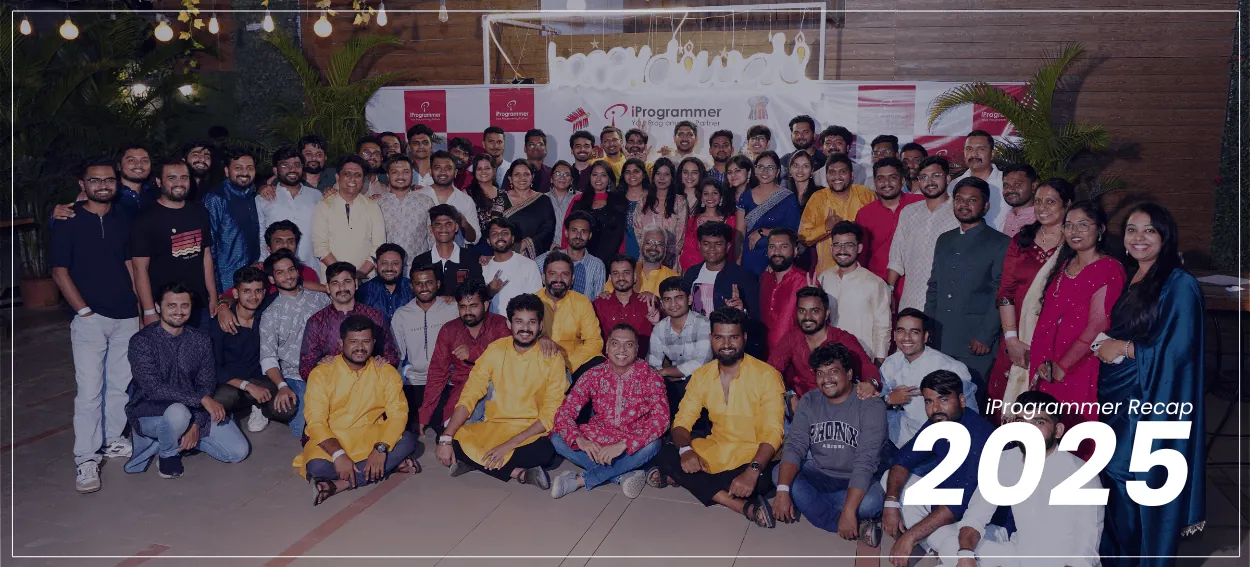
- A Year Anchored in Relationships
- The Vodafone Idea Moment
- Odoo Community Days Ahmedabad and Ground-Level Relevance
- Odoo Community Days Brussels and the Platform Conversation
- Europe: Learnings in Scandinavia
- Australia as a Long-Term Base
- What 2025 Taught Us
- Keeping Us Grounded
- Going Into 2026 With Intent
Some years feel loud. Others feel steady. 2025 belonged firmly to the second kind at iProgrammer Solutions. It felt like a year where many threads we had been weaving for years finally aligned. Not into a finish line, but into clearer direction.
What stood out most was not any single milestone. It was the way conversations changed. Clients spoke less about possibilities and more about responsibility. Partners spoke about longevity, not scope. Teams spoke about building things that would still make sense five years from now.
This reflection is a moment of gratitude. For the people who trusted us, challenged us, and grew alongside us. And for a year that reminded us why quiet, deliberate work still matters in technology.
In 2025, much of our energy went into strengthening relationships that had already earned trust. Long-term partnerships asked more of us. They demanded depth, consistency, and an ability to think beyond immediate delivery. That pressure was welcome. It forced clarity.
Across industries, we saw a shift. Enterprises were no longer experimenting for the sake of novelty. They wanted systems that could hold weight. AI needed grounding. ERP needed extensibility. Engineering needed restraint as much as ambition.
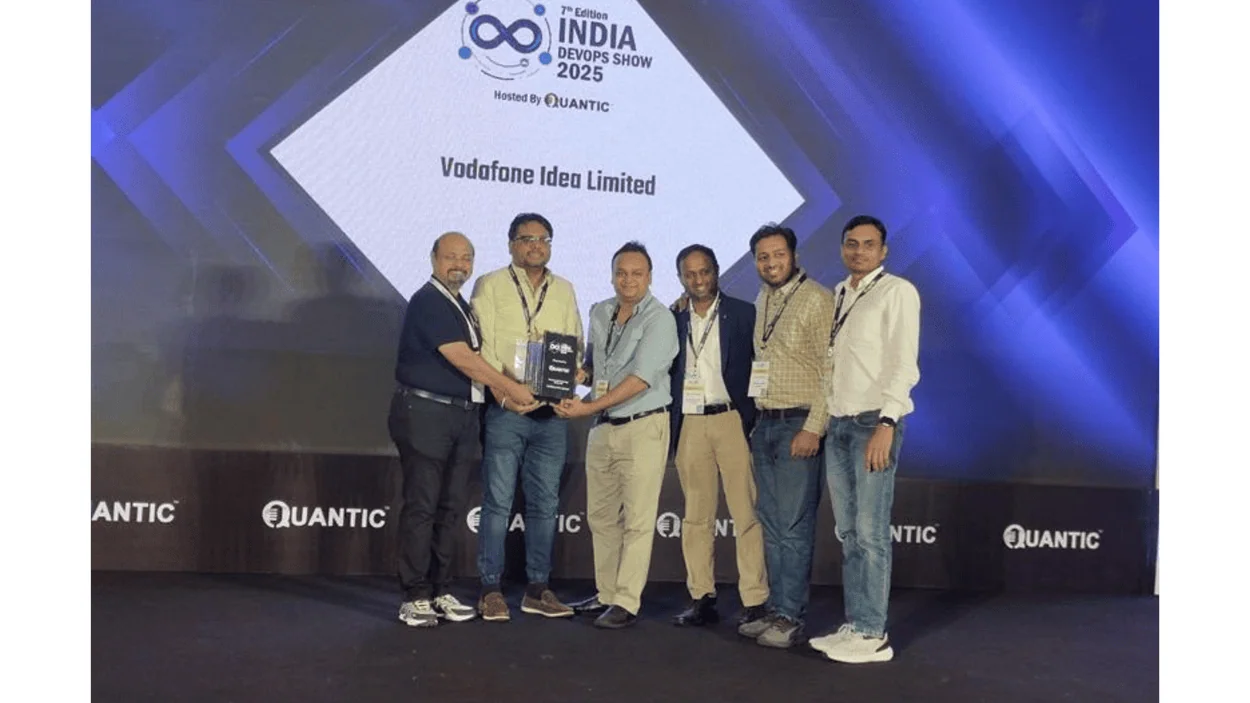
Awards rarely capture the full story behind them. When Vodafone Idea received recognition for Best Use of AI in DevOps in May, it marked a visible moment in a partnership that spans nearly a decade.
Behind that moment lies years of steady engineering. Embedded teams. Systems built to learn, adapt, and recover quietly. AI integrated not as an overlay, but as part of how DevOps decisions are made daily.
Telecom operates at unforgiving scale. Millions of users. Tight uptime expectations. Rapid release cycles. Intelligence in such environments must be precise and useful. Predictive insights, anomaly detection, and self-healing systems only matter if they reduce friction for real teams.
Being part of that journey remains a source of pride, not because of the award, but because of the trust it represents. Recognition affirmed a belief we hold strongly. Good engineering often works best when it stays invisible to users.
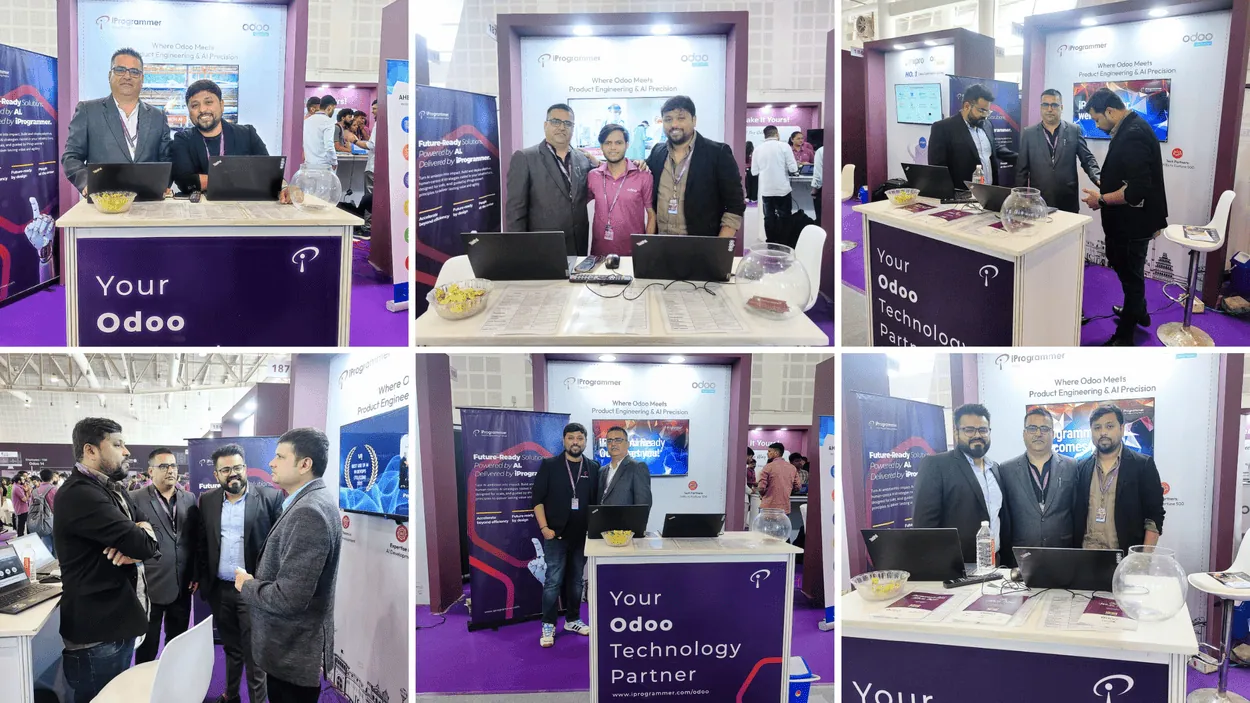
Odoo Community Days in Ahmedabad represented a different kind of engagement. The conversations here were closer to the ground, shaped by operational realities rather than platform theory.
Enterprise leaders, especially from manufacturing, chemicals, and distribution-driven businesses, were not asking abstract questions about ERP evolution. They were asking practical ones. How intelligence fits into daily operations. How safety, compliance, and productivity can be managed without adding overhead. How systems already in place can be extended, not replaced.
Our presence in Ahmedabad focused on showing how AI integrates into the Odoo environment in a way that feels natural to operations teams. Live demonstrations connected real-world events to structured records inside Odoo. Incidents became traceable. Compliance became continuous. Visibility replaced manual supervision.
What resonated most was not novelty. It was familiarity. Decision-makers could see how intelligence could sit quietly inside workflows they already trusted. For many MSMEs, this clarity mattered more than ambition. It reinforced a belief we hold strongly: technology adoption accelerates when relevance is immediate.
Ahmedabad was about translation. Translating advanced capabilities into everyday business language. Translating AI from promise into practice.
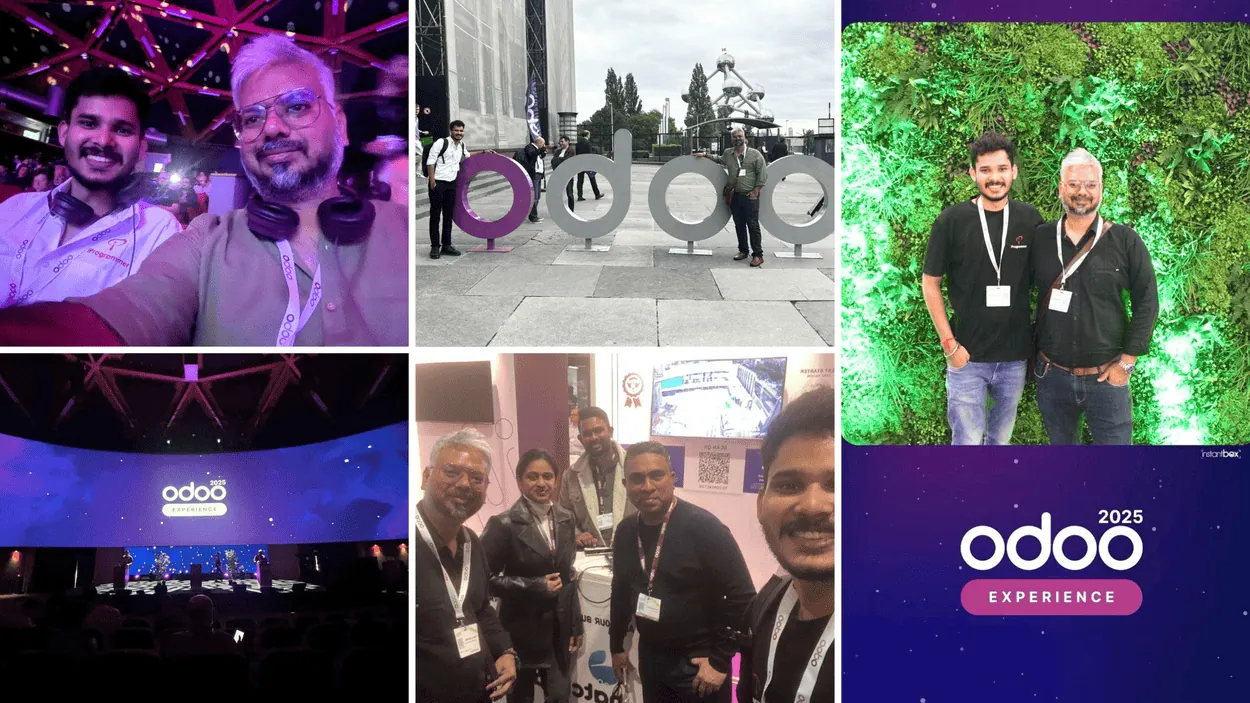
Brussels operated at a different altitude. Odoo Community Days 2025 in Brussels reflected an ecosystem thinking beyond implementation. Here, the discussion centered on scale, extensibility, and long-term ownership. Enterprises were evaluating Odoo not as software, but as infrastructure.
Conversations with partners, architects, and product leaders consistently returned to a few themes. Performance at scale. Upgrade-safe customization. Deep integrations with legacy systems. And increasingly, AI layered on top of ERP as a decision-support mechanism.
What became clear was a shift in partner expectations. Configuration-led delivery is no longer sufficient for large programs. Enterprises want engineering-heavy partners who can design systems that evolve without breaking. Who understand architectural trade-offs. Who can carry responsibility across years, not just releases.
Discussions around composable architectures, headless implementations, and Odoo as a system of record reinforced this direction. The ecosystem is maturing, and with maturity comes selectiveness.
For us, Brussels was less about visibility and more about validation. The way Odoo is evolving aligns closely with how we already operate: product mindset, engineering discipline, and long-term accountability.
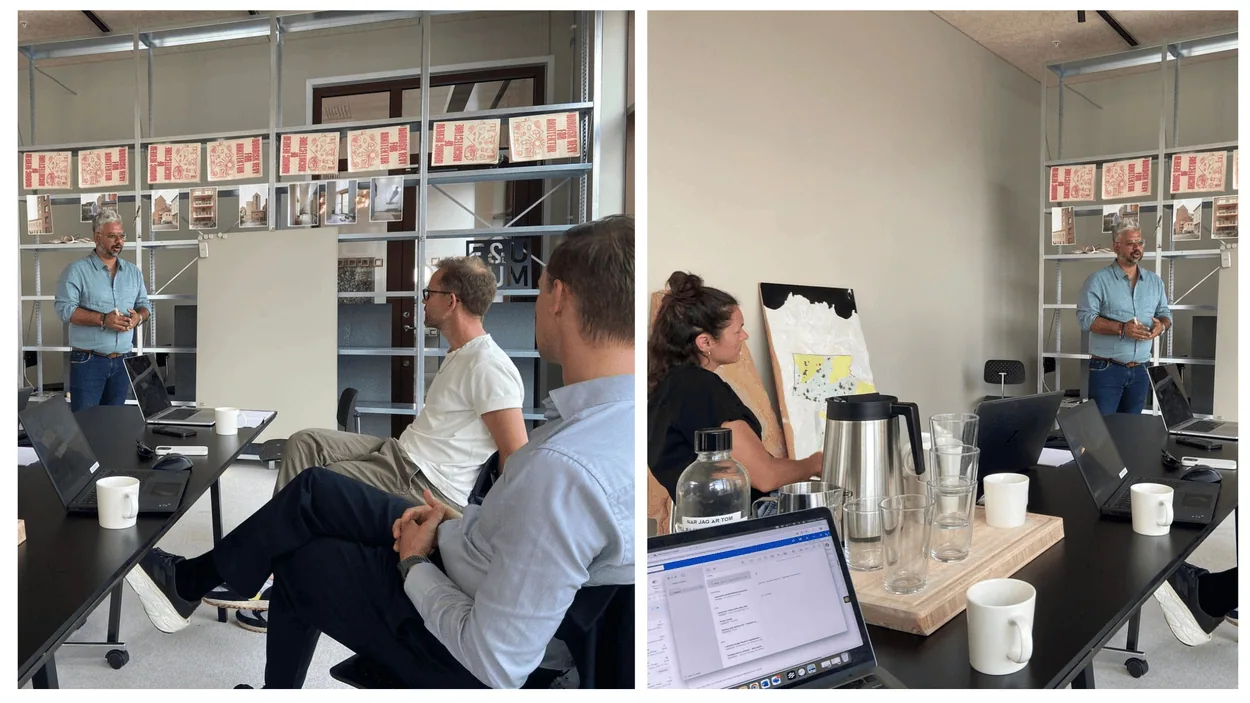
Our September visit to Scandinavia was not planned as a showcase. It was designed as a listening exercise. Two weeks of close interaction with partners, clients, and teams offered something rare. Time to understand how AI conversations mature when stakes are high.
What became immediately clear was a shared fatigue with surface-level experimentation. Organizations were past proof-of-concept fatigue. They wanted production-grade intelligence that could support real decisions. Especially in real estate, logistics, and manufacturing.
Discussions around feasibility intelligence revealed a common challenge. Early-stage decisions often lack structured data. Cost estimates rely on experience more than evidence. Design changes ripple through budgets without clear visibility. AI, when positioned carefully, could act as a decision companion rather than an automation layer.
Workshops on AI readiness reinforced another truth. Technology adoption is rarely a tooling problem. It is a mindset shift. Resistance softened once teams saw AI applied to daily tasks, not abstract use cases. Productivity improved when relevance replaced hype.
What we carried back was not just opportunity. It was confirmation that responsible AI adoption requires patience, education, and strong data foundations. It aligned deeply with how we already build.

Expansion carries weight when it is done thoughtfully. Opening our Australia office in 2025 was not driven by ambition alone. It followed years of collaboration with clients across the region.
As engagements matured, proximity became less about geography and more about execution. Clients required faster feedback loops, contextual understanding, and on-ground continuity—particularly as AI initiatives shifted from pilots to operational systems embedded into daily workflows.
This evolution closely aligned with the growth of iProgrammer’s AI Development Services. Our AI work is structured around three enterprise pillars that reinforce one another—productivity, safety, and security—designed to strengthen operational confidence rather than solve isolated problems.
| AI Pillar | What It Solves at an Enterprise Level | Representative Solutions |
|---|---|---|
| AI Productivity Solutions | Eliminates hidden inefficiencies, improves visibility across workflows, and ensures operations run as designed | Product Counting & Grouping, Manufacturing Process Audits, Defect Detection, Employee Productivity Tracking |
| AI Safety Solutions | Moves safety from reactive reporting to real-time enforcement and prevention | PPE Detection, Fire & Smoke Detection, Crowd Management, Restricted Machinery Access, Incident Reporting |
| AI Security Solutions | Transforms surveillance from passive recording into actionable intelligence | ANPR, Intrusion Detection, People Head Count, AI Surveillance, Theft Alarm & Notification, Object Movement Detection, AI-Enabled Warehouse Management, Incident Support Chatbot |
Looking back, several lessons stand out clearly.
- First, AI is most effective when treated as decision infrastructure, not automation theatre. Enterprises value clarity over novelty.
- Second, platforms endure when they are engineered for extension. ERP systems, especially, must evolve without becoming fragile.
- Third, relationships scale only when responsibility is shared. Long-term partners expect you to think beyond contracts.
- Finally, growth feels sustainable when it follows trust, not the other way around.
None of this work happens in isolation. Clients who invite honest dialogue. Partners who share their roadmaps openly. Teams who choose rigor over shortcuts. Each played a role in shaping 2025.
Gratitude is not a soft sentiment. It sharpens focus. It reminds us why consistency matters more than visibility. Why building quietly can still shape industries.
We remain thankful for the confidence placed in us, especially in moments where outcomes were uncertain.
The direction in 2026 feels clearer. AI will move deeper into enterprise decision-making. ERP systems will continue to absorb intelligence layers. Engineering responsibility will increase, not decrease. Expectations will rise accordingly.
We step into the next year with commitment. Ready to listen, build, and refine, with consistency.